
E-mail:
sale08@lzxkjx.comCall Us:
+86 15390744145
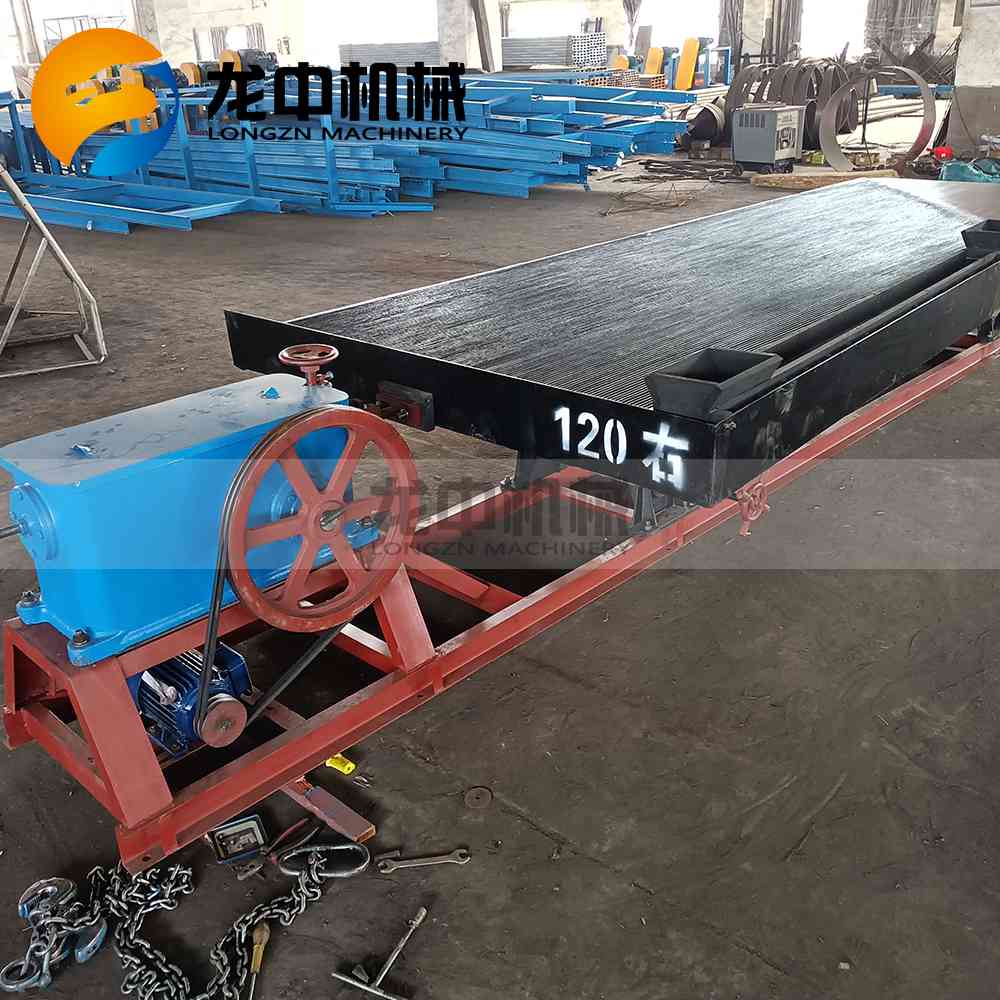
The 6-S shaking table generally exhibits stable performance during routine operation. However, in actual production, certain common issues may arise due to factors such as improper maintenance methods and incorrect installation of replacement parts. Most operators lack the experience to diagnose and repair these problems, which can disrupt normal plant operations and lead to unnecessary losses. Based on years of production experience and after-sales feedback, our factory has summarized the frequent problems encountered with the 6-S shaking table and their corresponding solutions for customer reference.
I. Key Parts Prone to Causing Abnormal Noises:
① Large pulley
② Rocking arm
③ Spring
④ Eccentric shaft
⑤ Toggle plate
⑥ Support plate of the shaking box on the saddle base foot
II. Inspection Methods and Solutions
For the Large Pulley
Stop the machine and inspect by manually rotating the large pulley. If any play is felt, it indicates that the pulley is not securely installed. This can easily lead to abnormal noises during operation.
Solution: Insert a piece of discarded hacksaw blade or a thin metal shim into the keyway (commonly known as the key slot) of the large pulley, then tighten the adjacent fastening screws. Recheck to ensure the play is eliminated.
For the Rocking Arm
Stop the machine for inspection. First, remove the two adjacent toggle plates. Use one hand to stabilize the large pulley while using the other hand to rock the rocking arm. Under normal conditions, the arm should only move left and right with some resistance and should not move back and forth. If the opposite occurs, it indicates that the rocking arm is not securely fixed. This situation can also lead to abnormal noises during production.
Solution: Tighten the fastening screws on the rocking arm.
For the Spring
Stop the machine and inspect. Check whether the spring has shifted out of position, such as becoming misaligned or eccentric.
Solution: Use a hammer to strike the spring, forcing it back into its proper position.
For the Eccentric Shaft
Similarly, stop the machine for inspection. Use both hands to stabilize the large pulley and attempt to rock it back and forth. If movement or mechanical play is detected, it indicates that the eccentric shaft is not securely fixed.
Solution: Tighten the two small screws on the oil seal cover of the 6-S transmission box.
For the Toggle Plates
Inspect while the machine is running. Use the thumb and middle finger of one hand to touch the two toggle plates respectively (ensure safety when conducting this inspection) to detect any play.
Solution: Adjust the screws on the spring tie rod based on the actual degree of play. If it is loose, tighten the screws; if it is too tight, loosen them appropriately.